

The basalt is black, and the Atlantic pounds El Hierro with an ancient, unchanging rhythm. On this far-flung island of 11,000 people, sovereignty wasn’t born of abundance; it came out of existential necessity. From the ancestral Garoé (the sacred Bimbache tree said to capture fog and distill water) to contemporary engineering, the island has trained itself in a decidedly unromantic idea: survival through managing limits.
That’s why I chose this territory for a reporting trip. I wasn’t looking for a postcard; I wanted a question that could be tested against reality: is El Hierro a replicable “laboratory,” or an outlier propped up by conditions that can’t be reproduced (isolation, scale, social fabric)? Theory lives in laws and plans. Reality requires listening to the people who keep the system running when the wind drops, when tourist pressure rises, or when basic resources such as water, energy, and land start to feel fragile.
My provisional conclusion is straightforward: El Hierro works as a laboratory when it manages limits; it turns into an experiment when success pushes it to ignore them.
Energy: 100% peaks, a 50–60% average
At the Gorona del Viento wind-hydro plant, inaugurated in 2014, the island’s pulse is tracked on system screens: a choreography of curves, alarms, and micro-decisions. Félix Boda, head of infrastructure, puts it plainly: “A problem in a tiny grid is bigger than in a big one.” On an island, a fault on one line isn’t an incident; it can become a domino effect that drags the entire system down.
In the control room, the constant hum of ventilation and the blink of indicators make energy feel tangible. There’s no epic narrative here, just operations.
The technology is familiar: five wind turbines and an elevated reservoir that acts like a battery when the trade winds blow. What matters is the scale of the achievement, and the room for imperfection. Davinia Armas, the Island Council’s tourism lead, gives the institutional headline number, but with useful precision: the system has reached 100% self-sufficiency peaks for 25 consecutive days, while the annual average hovers between 50% and 60%. Even so, diesel is still there as backup. Energy sovereignty, it turns out, isn’t all-or-nothing; it’s a matter of degrees.
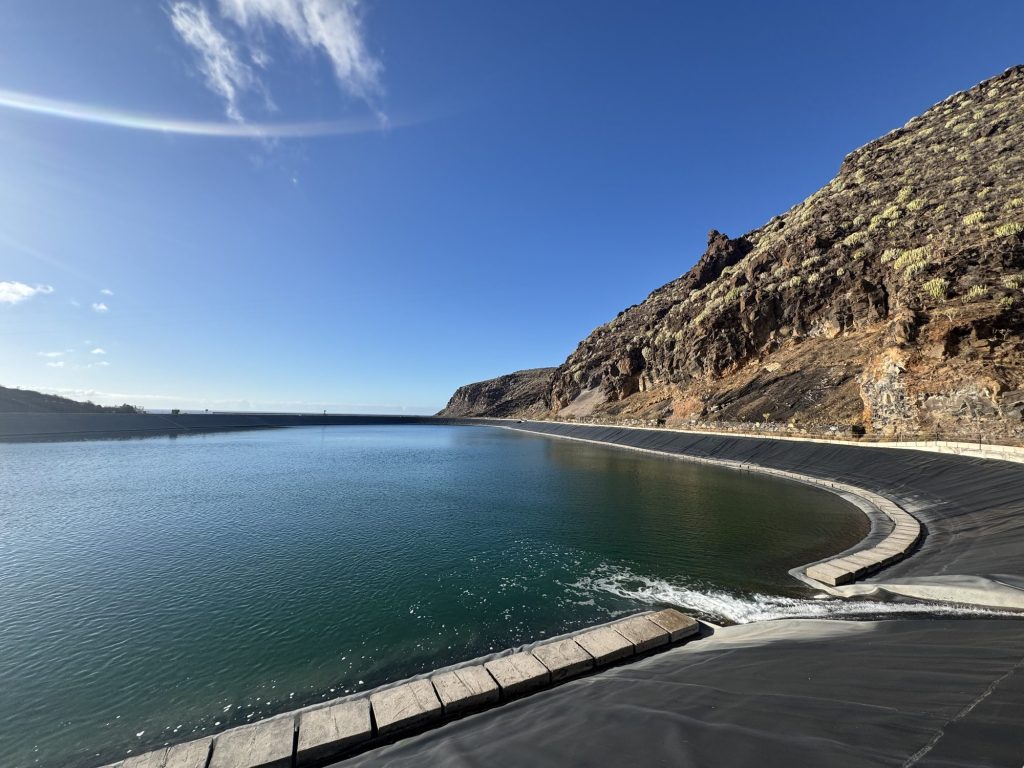
Cristina Morales, Gorona del Viento’s communications lead, introduces a less-quoted tension: sustainability doesn’t hold up on the hero story of renewables alone; it also depends on whether people feel the benefit. “People see it more positively when it hits their wallet,” she says. “Everyone will tell you they save two hundred euros a month thanks to a hybrid or electric car, but nobody calculates the kilos of CO₂ they stop emitting.” In other words, the model works, but real climate awareness still competes with pragmatism.
Tourism: a destination that filters its visitors
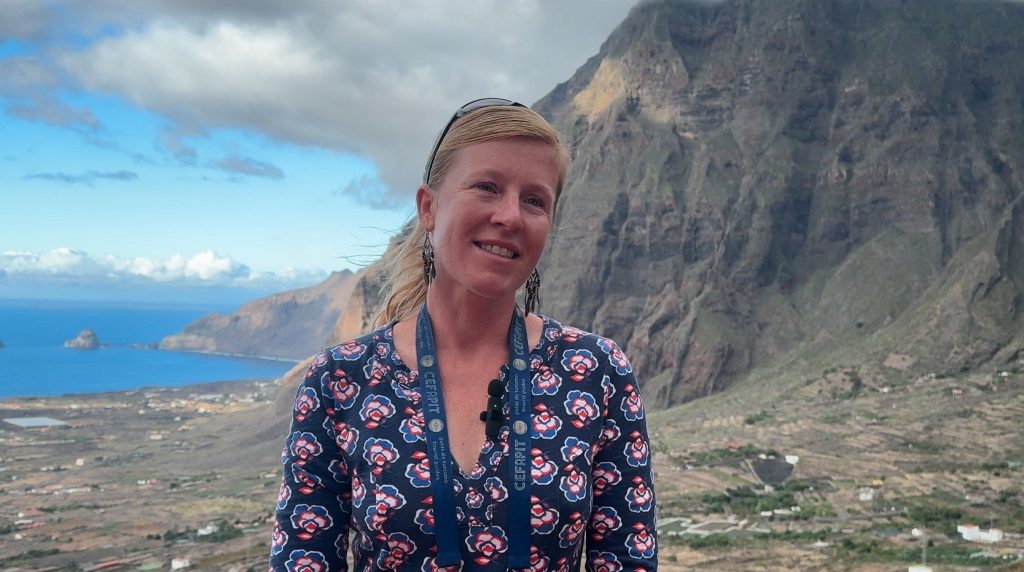
That mix of limits and pragmatism runs through tourism, too. In Joapira, beneath the white silhouette of the Chapel of La Candelaria, Joanna Rudnik, an official tour guide, defends an idea that doesn’t sound like a slogan here: “We don’t depend on oil that arrives by ship. That makes us a real destination.” For her, El Hierro makes sense because it doesn’t offer crowds; it demands time, connections, hikes, and silence. And that barrier filters the visitor.
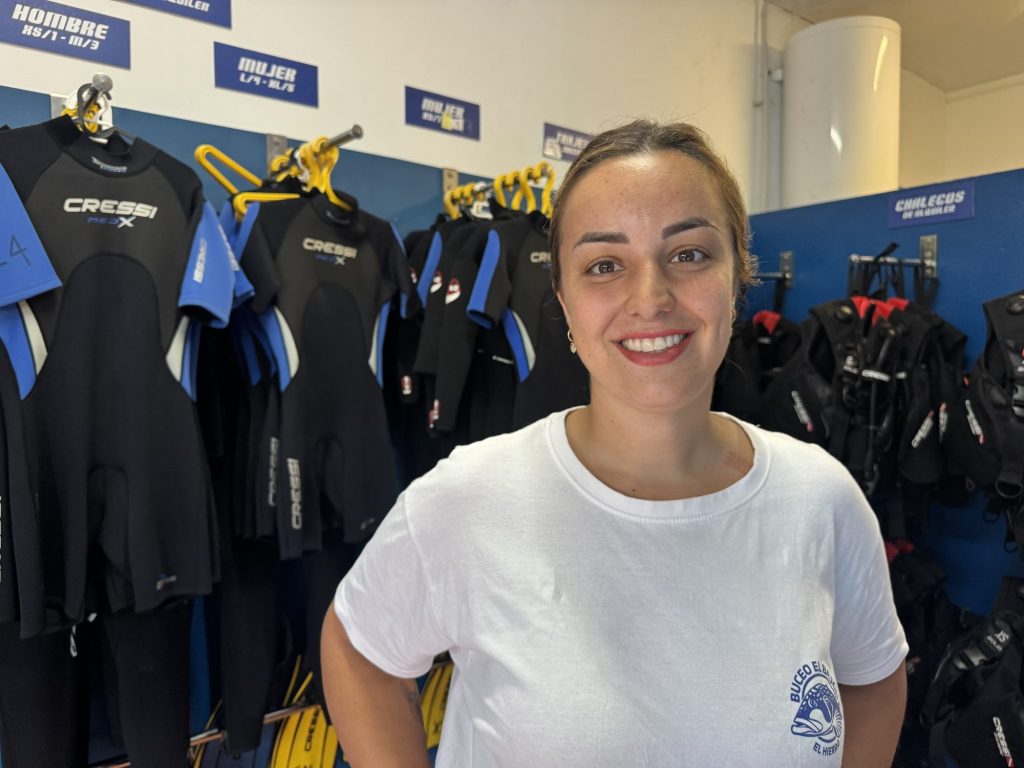
In the south, in La Restinga, sustainability stops being an abstract concept and becomes behavior. Gisella Horn, from Buceo El Bajón, describes a kind of normalcy that feels unlikely to anyone arriving from saturated destinations: “We leave the keys in the car; when you see everything is preserved, people respect it.” Selective fishing is part of that same culture—here it’s not packaged as a “tourist experience,” but treated as the rule for keeping the fishing grounds alive.
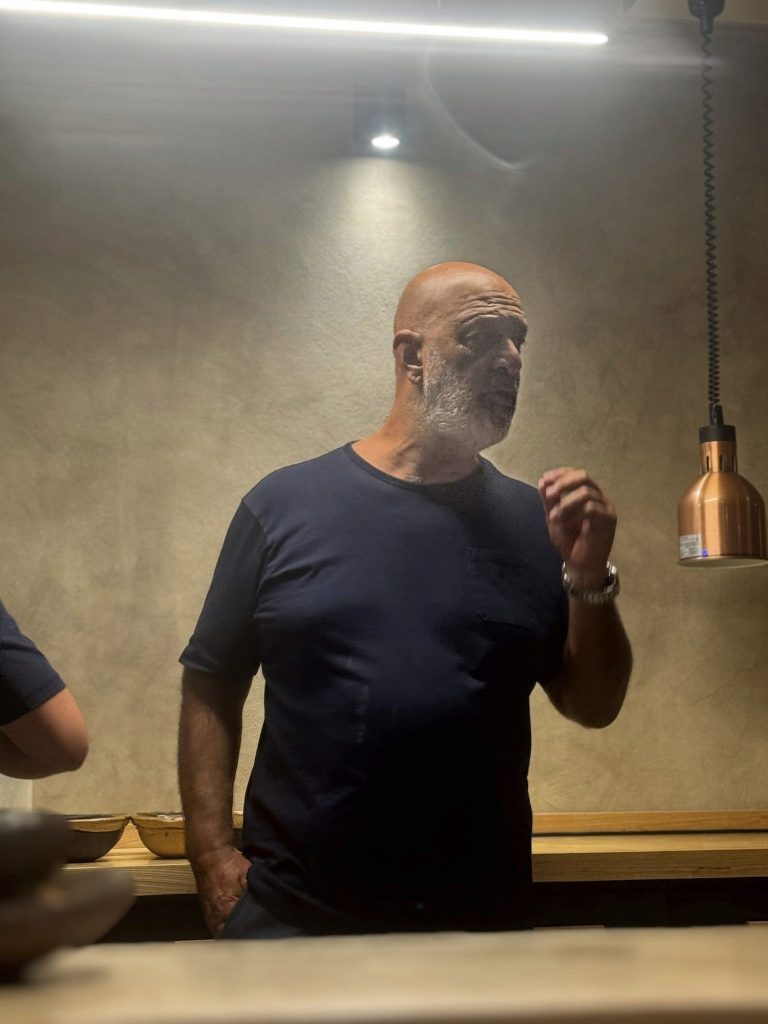
But the island’s story doesn’t hold if you avoid friction. Marcos Tavío, chef at 8 Aborigen, blows up complacency with a line that forces a choice: “You can’t talk about eighteen million tourists in the Canary Islands and, in the next sentence, talk about sustainability.” His critique isn’t aimed at the idea of “green,” but at sustainability as a label with no cost. El Hierro, he warns, still has a chance: to learn from other people’s mistakes before the pressure of success turns it into a copy.
Culture and governance: Sabinosa and the 3,800-bed cap
In the midlands, resistance is both cultural and material. In Sabinosa, isolation drove decades of emigration to Venezuela. Today that capital returns as memory and craft. Herminio, president of the ethnographic association Sabinosa un Sentimiento, works to keep the village from sliding into the slow-motion abandonment common on islands: restoring shared spaces so culture isn’t a set piece, but an economy that can sustain life.
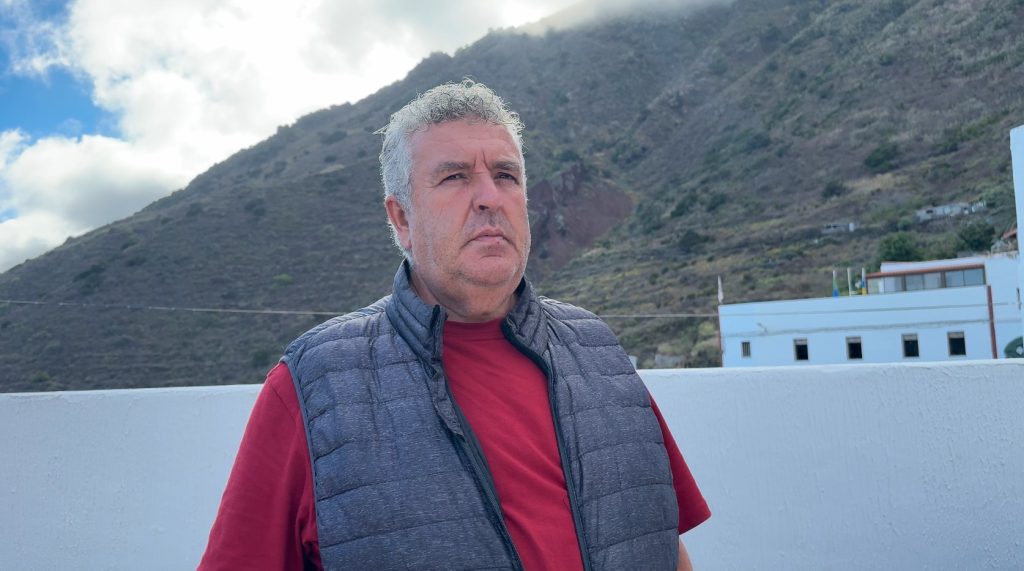
Governing this system (energy, culture, tourism) requires tools that can say “no” in time. The 2019 Islas Verdes Law (Ley 14/2019) sets caps. Davinia Armas turns it into a number: 3,800 accommodation beds as the legal limit. She also points to a concrete pressure growing below the average visitor’s radar: the surge in vacation rentals since 2020 is overwhelming a territory that is, at once, a Biosphere Reserve and a UNESCO Global Geopark. The limit isn’t only environmental; it’s social.
Lab or experiment: the provisional answer
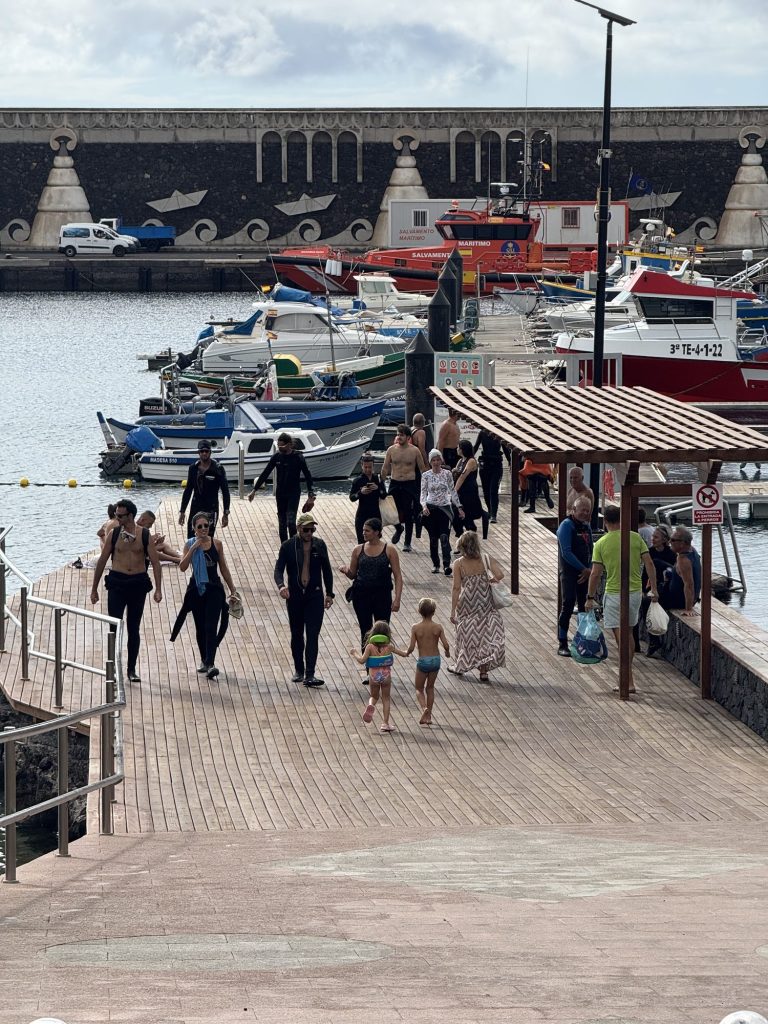
At dusk, by the Orchilla Lighthouse (the old zero meridian erased by Greenwich), any utopian temptation cracks. The same dock in La Restinga that welcomes divers also bears witness to the quiet arrival of a migrant boat. El Hierro isn’t an unreachable arcadia. It’s a real border.
Lab or experiment? El Hierro shows that sustainability isn’t something you certify—it’s something you manage every day. In the end, the value of this Atlantic outpost isn’t that it has solved the riddle of development, but that it forces us to face the uncomfortable question any finite place must answer: what does it mean to live well when the territory—truly—has a ceiling.
More from this reporting trip
- Photo essay. El Hierro: an island that slowed down
- Film and podcast. El Hierro, the pulse of the Garoé, with six voices from the island
- Travel guide. How to get there, where to stay and four itineraries, plus the full guide as a free PDF
- The whole project. The logbook, a timeline and everything in one place
Photographs by the author, El Hierro, October 2025. Portrait of Joanna Rudnik: still from the author’s video interview.


