

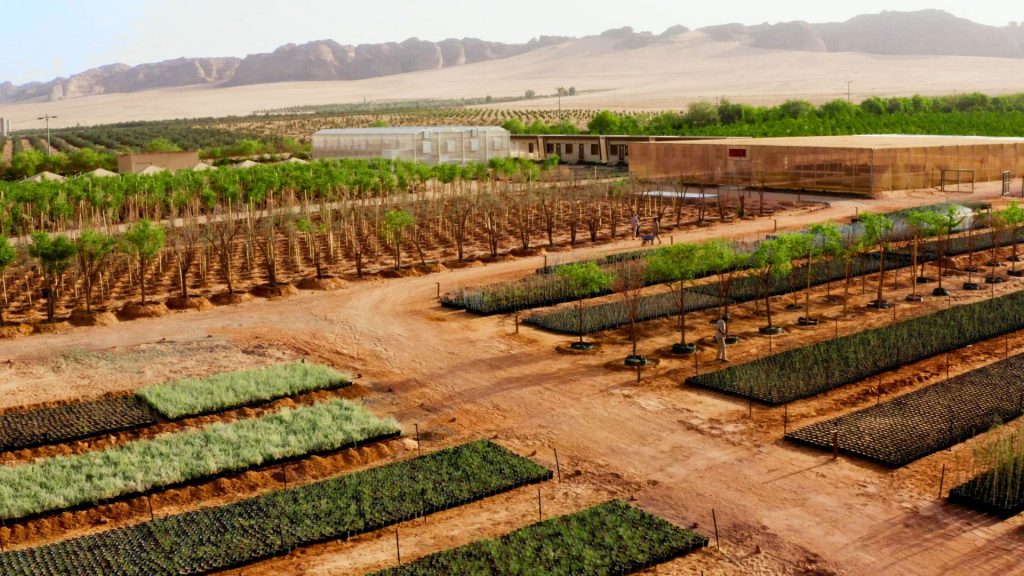
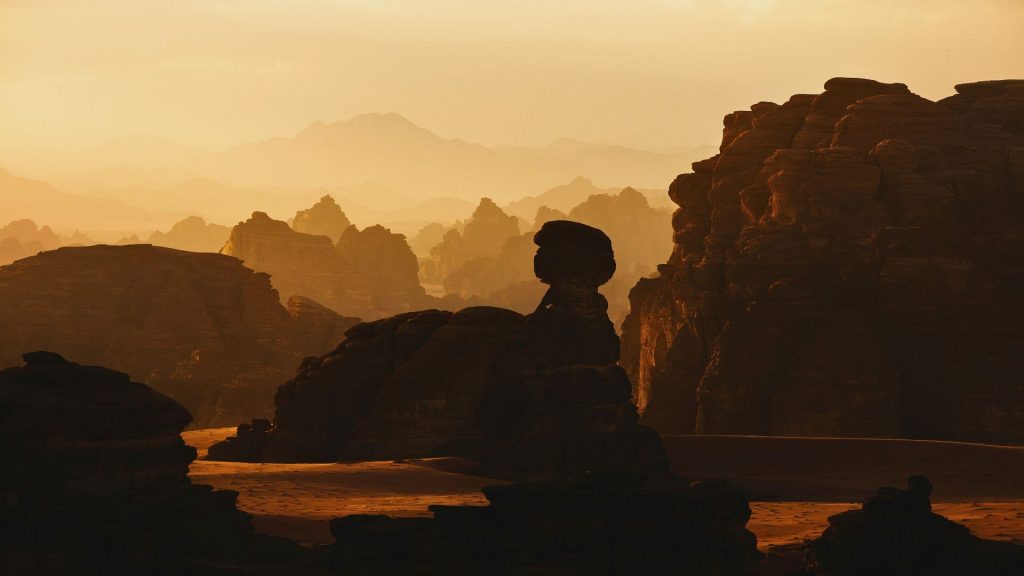
In Northwest Saudi Arabia, where orange sandstone formations rise above wind-sculpted valleys, one of the most ambitious ecological restoration projects in the global tourism industry is taking shape. The Royal Commission for AlUla (RCU) has launched a monumental initiative: the production and planting of more than one million native seedlings.
The goal is to rehabilitate 160,000 acres (65,000 hectares) of degraded land by 2030. However, this botanical deployment goes far beyond simple landscaping. It is a complex operation involving water engineering, the recovery of ancient heritage, and an economic restructuring that seeks to transform the historic heart of the Incense Road into the gold standard for regenerative tourism.
Water Engineering: Defying Hydrological Stress
The greatest challenge for any green mega-project in the Arabian Peninsula is water management. More than two thousand years ago, the Nabataean civilization mastered this extreme environment through a sophisticated network of wells and underground channels (qanats). Today, modern science is taking over to ensure that these million plants survive without compromising local aquifers.
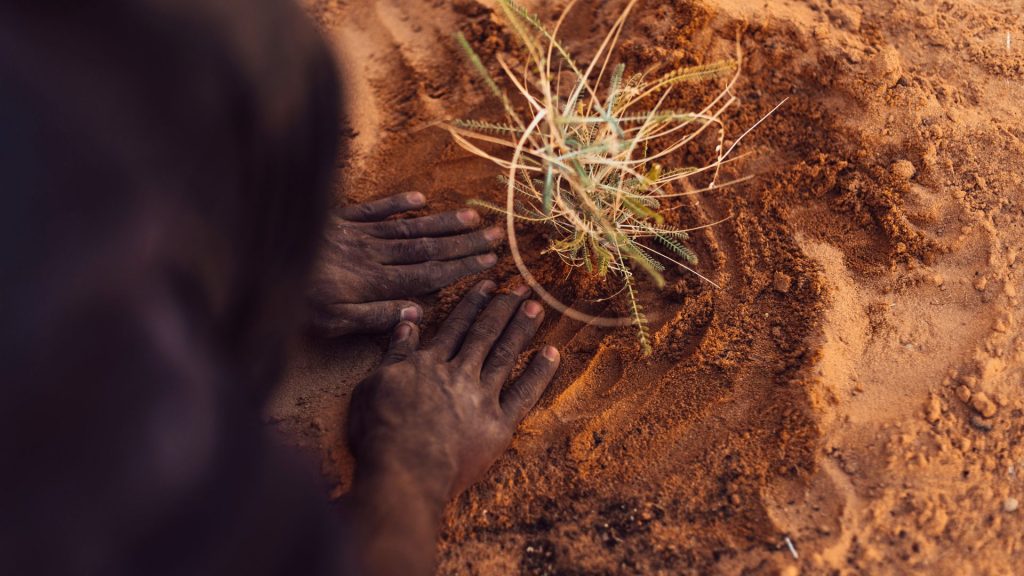
Technical sources from the project detail that initial irrigation is sustained by strictly monitored groundwater, but the real success lies in adaptation. A cultivation method is being applied to stimulate deep root growth, forcing the seedlings to seek their own underground supplies. The roadmap stipulates that artificial irrigation systems will be removed once the ecosystem has stabilized. Parallel to this, field techniques such as “crescent planting” are being implemented to optimize the retention of every drop of rain, turning AlUla into a global laboratory for climate adaptation.
Ethnobotany: Resurrecting the Incense Road
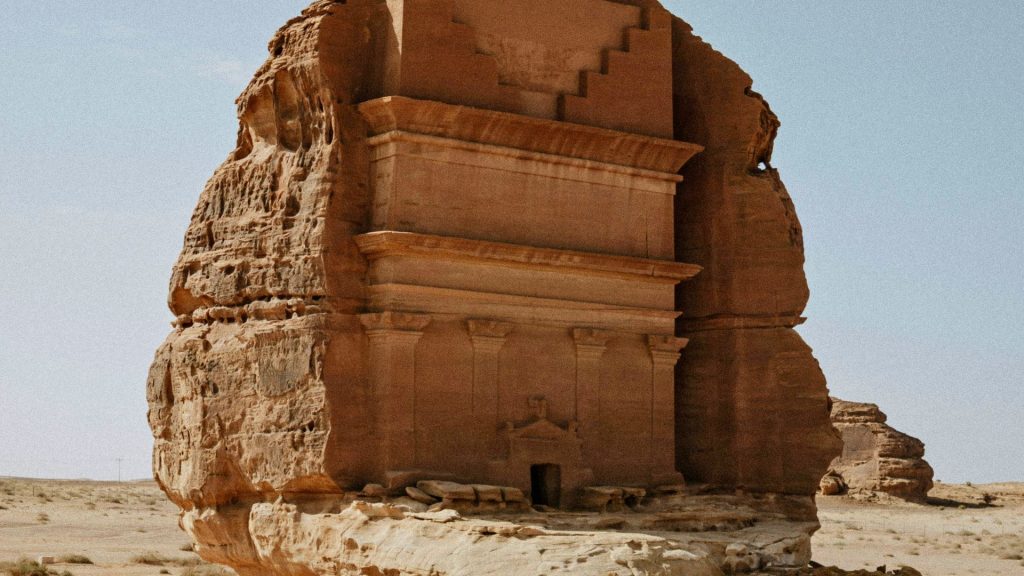
AlUla is, above all, an open-air museum. Enclaves like Jabal Ikmah—recently included in UNESCO’s Memory of the World Register—document in stone how the Dadanite, Lihyanite, and Nabataean civilizations at Hegra flourished through the oasis and the trade of aromatic species.
The reintroduction of this native flora is, therefore, a recovery of ethnobotanical identity. In protected areas such as the Harrat Uwayrid Biosphere Reserve, sustainable livestock management is already allowing local communities to once again harvest medicinal plants that had vanished due to overgrazing. The initiative has also reactivated ancient stone beehives, which now benefit from an abundance of wildflowers to produce highly prized local honeys.
Even cosmetic innovation is joining this circular economy: the AlUla Peregrina program currently uses cutting-edge science to create high-end skincare products from the oil of the moringa peregrina, a traditional tree whose seeds were already considered a luxury in antiquity.
Economic Transition: Luxury as a Financial Catalyst
This level of environmental intervention requires extraordinary financial muscle. The economic seed comes from the Public Investment Fund (PIF), Saudi Arabia’s sovereign wealth fund driving Vision 2030 to diversify the economy beyond fossil fuels.
Through the AlUla Development Company (UDC), a PIF-owned entity, the destination channels its infrastructure development. As recently confirmed to the financial press by Phillip Jones, Chief Tourism Officer at AlUla, the project has a secured annual budget of 14 billion Saudi riyals. However, long-term viability depends on private capital. The destination aims to attract $1.6 billion in international investment, with the goal of having private funds and luxury hotel chains eventually cover 40% to 50% of the model’s total financing.
This strategy explains why more than 140,000 of these native plants have already been deployed across five-star boutique resorts. By limiting hotel landscaping to native species (such as the oasis’s ancient citrus trees), artificial maintenance is drastically reduced, and the resorts—financed by high-impact tourism—are transformed into biological corridors connected to the reserves.
The Ultimate Metric: The Return of Wildlife
Ultimately, the success of a science-backed ecological restoration is not measured by nursery capacity, but by the wildlife that chooses to return. Sharaan National Park (where Prince William recently planted one of these native acacias) reports plant survival rates exceeding 90%.
All this effort in vegetation coverage and rewilding is designed with a greater goal: preparing the ecosystem for the reintroduction of the critically endangered Arabian leopard.
But while preparing for the return of the apex predator, monitoring is already yielding extraordinary and unplanned indicators of success. Recent RCU records reveal that the sooty falcon has been sighted in Sharaan again after years of absence. Currently, an estimated 4% of the global population of this raptor species nests in this area during the breeding season.
AlUla’s green deployment proves that the Saudi destination isn’t just building infrastructure in the desert; it is reactivating a millennial ecosystem. By merging water engineering, archaeological heritage, and strategic investment, the ancient oasis stands as a tangible blueprint for climate resilience and the regenerative tourism of the future.
Documentary images of the botanical project provided courtesy of the Royal Commission for AlUla (RCU).
Transparency Note: This report has been produced under strict criteria of journalistic independence and editorial curation. No brand, sovereign wealth fund, or destination has financed, reviewed, or influenced the editorial analysis presented in this text. The practical recommendations included in the “Conscious Traveler’s Guide” are offered entirely independently, based solely on the professional criteria of Covadonga Riesco in her capacity as a Travel Advisor.


