

From the terrace of my room at Hotel Akelarre, I feel the wind and hear the sea roaring through one of winter’s first storms in the north. The entire terrace is soaked, but the view of the ocean steals the show at Pedro Subijana’s place—and I don’t just want to see it, I want to smell it and hear it. Later will come the moment to taste it, but that’s another story.
Luxury at Akelarre isn’t obvious or unnecessary; it’s about respecting a space designed to open hearts, converse with nature and origins, and let yourself be wrapped by the sea in a building that blends into Monte Igueldo to offer you a one-of-a-kind balcony over the Cantabrian Sea.
In this feature:
Hospitality | Architecture | Sustainability | The Refuge | Hotel Information
Hospitality as an extension of culinary legacy
You can’t understand Akelarre without Pedro Subijana, one of the founders of New Basque Cuisine. His restaurant, awarded three Michelin stars, celebrates 50 years of a unique trajectory as a global benchmark for culinary innovation. The hotel’s opening in 2017 is the culmination of a philosophy of total hospitality that turns a meal into an unforgettable stay.
For Subijana, each guest is unique. “They’ve come to my house today,” he says, emphasizing the intimate and personal nature of his approach. This feeling responds to the goal of creating a space worthy of the gastronomic experience—a place where you can extend the sensory pleasure without leaving Akelarre’s creative universe. Sustainability is part of that hospitality: caring for the home’s surroundings means caring for the guest.
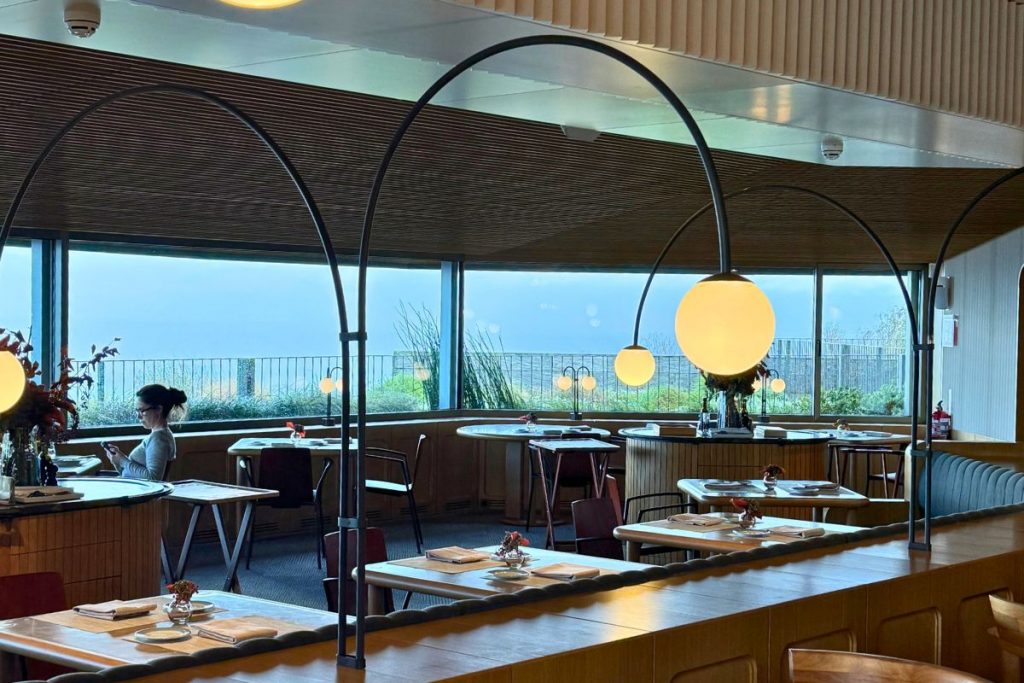
Architecture of subtraction: blending with the mountain
The hotel’s location posed a significant architectural challenge. The task was to add a substantial volume (22 rooms and a spa) without altering the mountain’s iconic silhouette or overshadowing the original restaurant. Marta Urtasun and Pedro Rica, from the Mecanismo studio, understood that the key lay in “architecture of subtraction” and symbiosis.
Instead of building a structure that competed with the landscape, they chose to embed the hotel below the restaurant level, excavating the hillside. The result is cubic volumes that emerge from the earth like natural strata, making them nearly invisible from the upper access road.
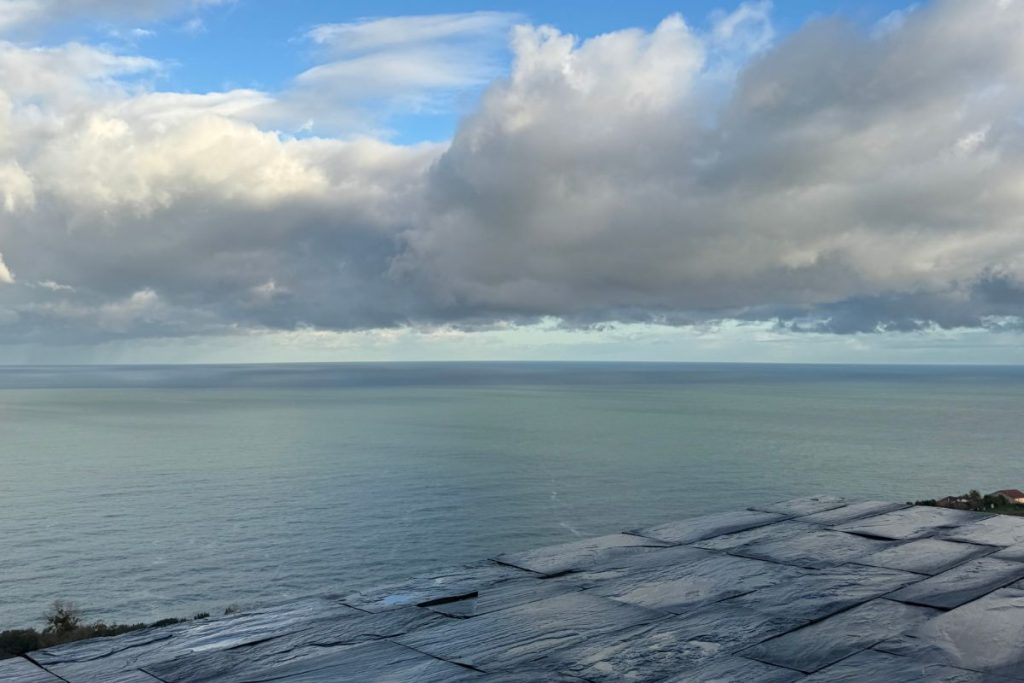
Natural stone—moiré phyllite—is key to both landscape integration and the building’s energy efficiency. This grayish, textured stone isn’t just cladding; it’s the skin that allows the building to breathe and blend with the coastal Flysch and surrounding vegetation. It was used for both ventilated facades and interiors, creating visual continuity that connects you with the landscape and blurs the boundaries between inside and outside.
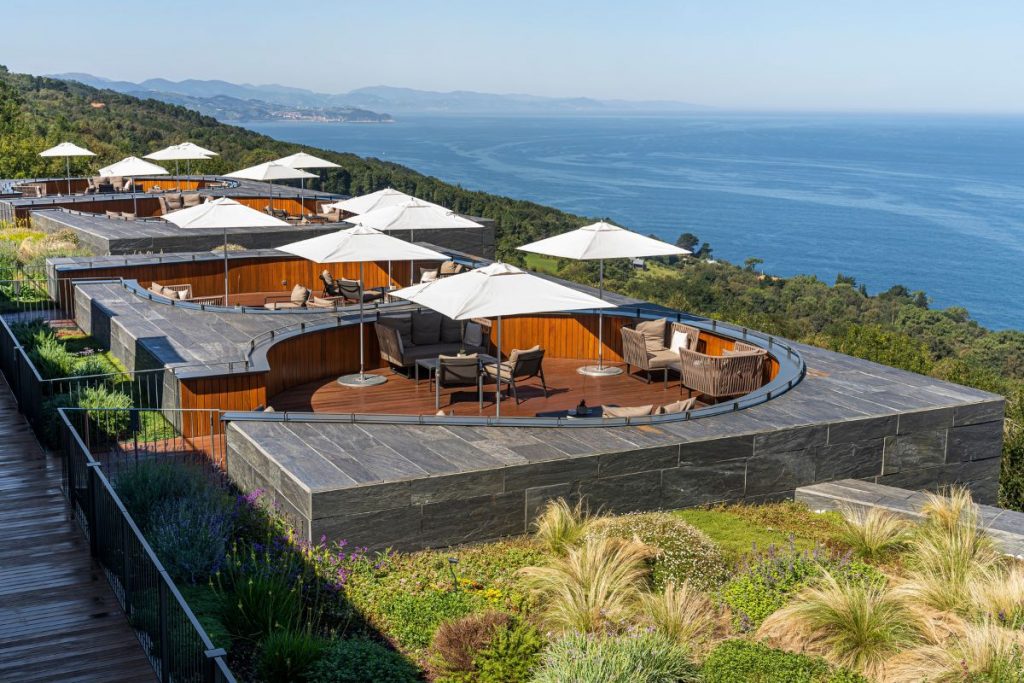
The ventilated facade also acts as a thermal shield, protecting the building from salinity and northern winds while reducing energy demand for climate control. The roof of the residential modules was designed as a walkable garden, functioning simultaneously as a terrace for the restaurant above and as natural insulation, helping to integrate the building into the topography organically.
Real sustainability: Efficiency and Horeca Zero commitment
Being the first Spanish hotel to obtain the European Ecolabel is a statement of intent, but the execution goes far beyond the certificate. The entire team, led by Oihana Subijana, has internalized this philosophy since opening. It translates into rigorous energy optimization, taking advantage of the natural light flooding in through the north-facing facade, consuming 100% renewable energy, and implementing high-efficiency climate control systems.
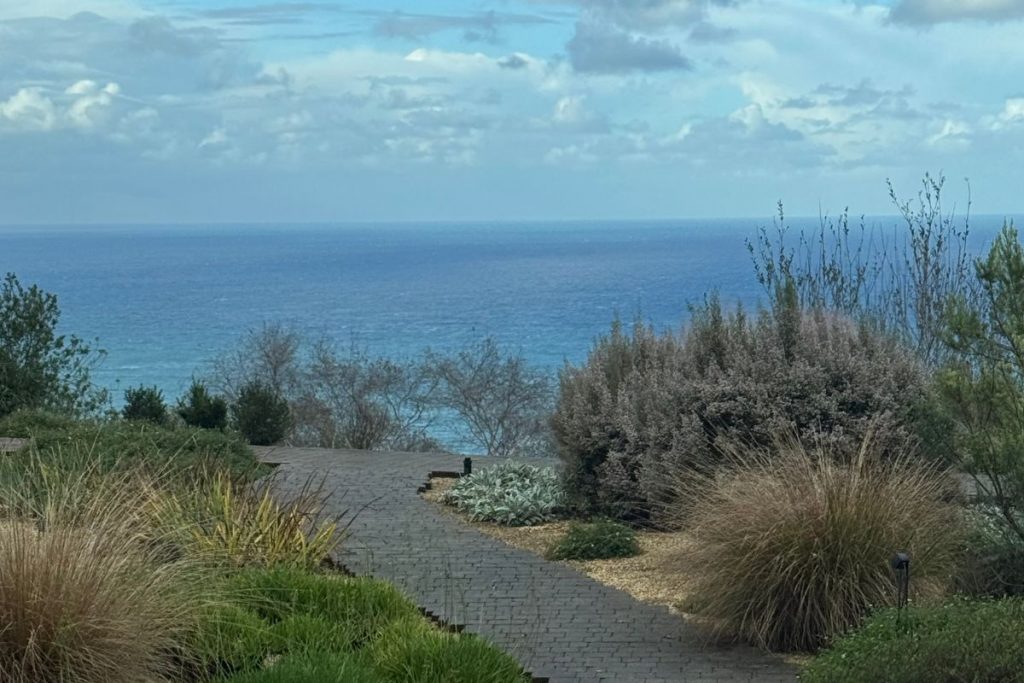
At Akelarre, they’re fiercely committed to avoiding plastic waste generation and proper recycling separation. They have flow controllers on faucets to prevent water waste and promote sustainable mobility through electric vehicle charging stations.
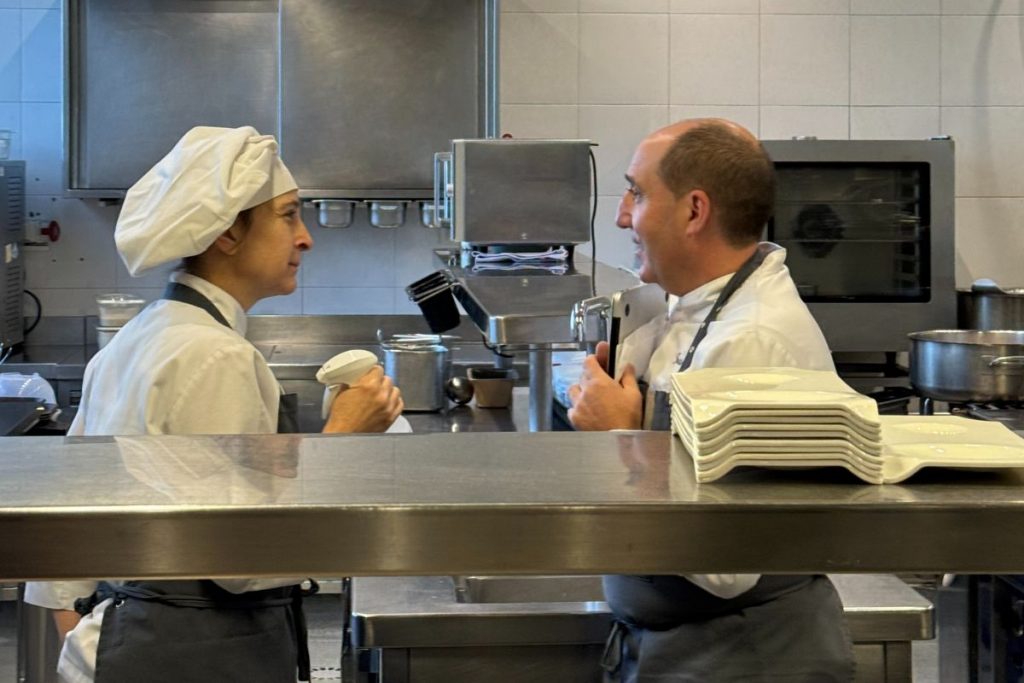
This philosophy extends to the kitchen, where zero-kilometer products are law. By working with local and national suppliers, they reduce food transportation’s carbon footprint, minimize waste, and support local employment. Additionally, the restaurant leads the Horeca Zero project for food waste reduction—an initiative in collaboration with the Basque Culinary Center Innovation (BCCInnovation) technology center and Bilibin Koop, a consulting firm specializing in circular economy. Espacio Oteiza also participates in this project, reaffirming the alliance between sustainability and innovation in haute cuisine.
Art, memory, and origin on the plate
So when you sit at their tables, the sea is also an ingredient, a flavor, an aroma, a feeling that captivates you as you gaze through the large windows or contemplate the small sculpture (enormous in sentiment) that Jorge Oteiza himself gifted to his friend Pedro Subijana—the artist to whom Subijana dedicated his less conventional yet most everyday space.
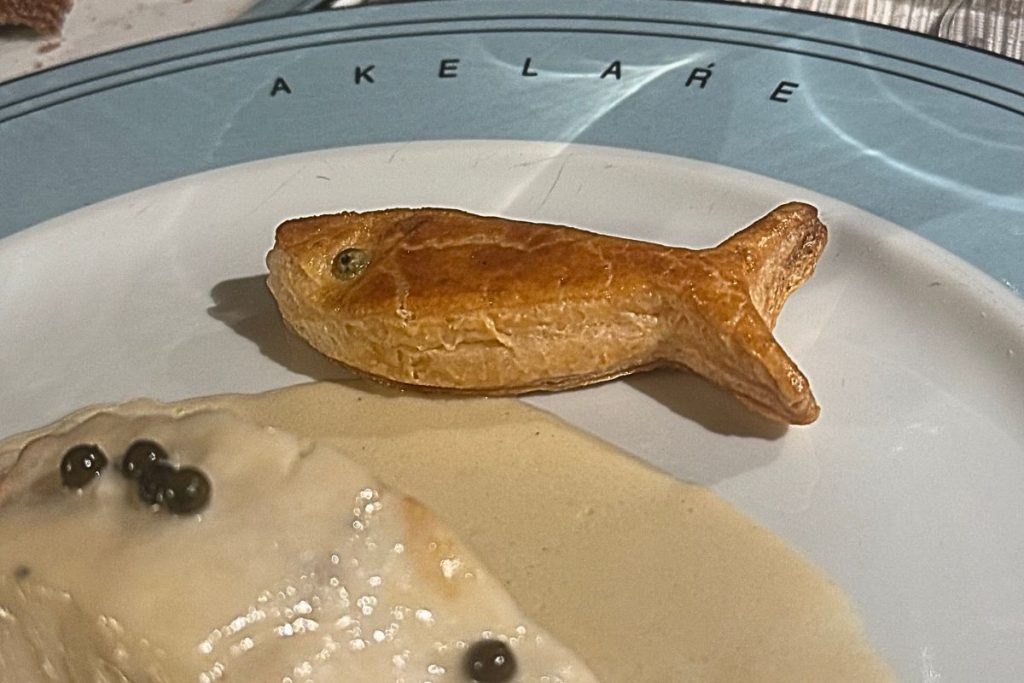
And when you enjoy a dish like hake in green sauce, which has been on his menu for half a century, you realize that luxury is exactly that—the permanence of origin transformed with respect for the territory.
The refuge: An exercise in quiet luxury
To speak of quiet luxury is to speak of Akelarre. Here they celebrate the experience of guest-centered hospitality. The interior spaces are an exercise in elegance and restraint where nothing is excessive. Each of the 22 rooms, ranging from 540 to 1,076 square feet, functions as a private viewpoint over the Cantabrian Sea.
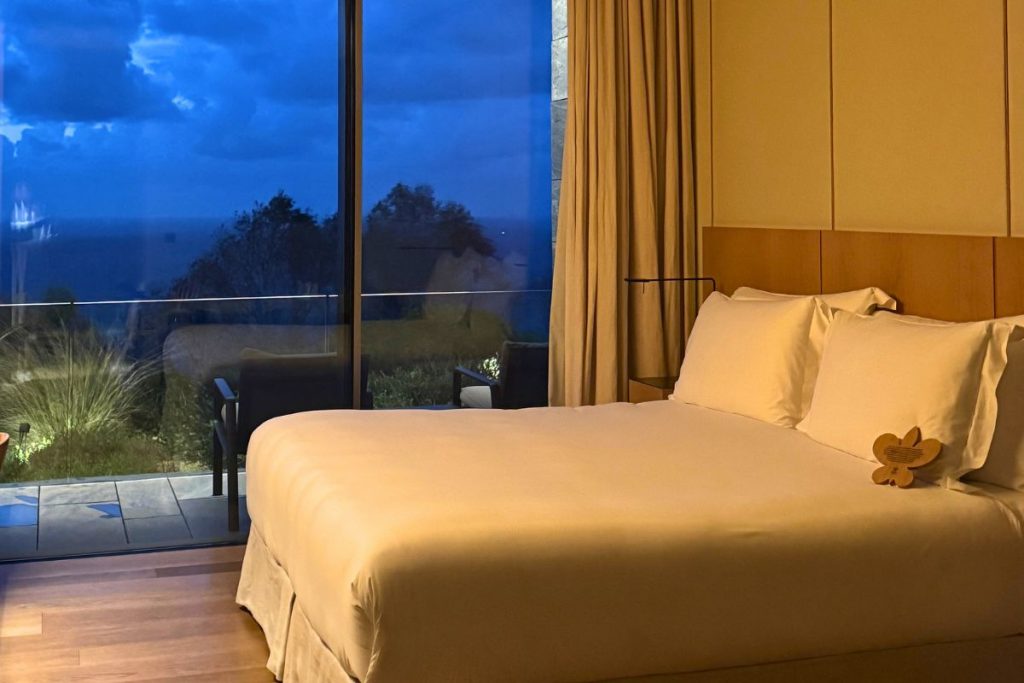
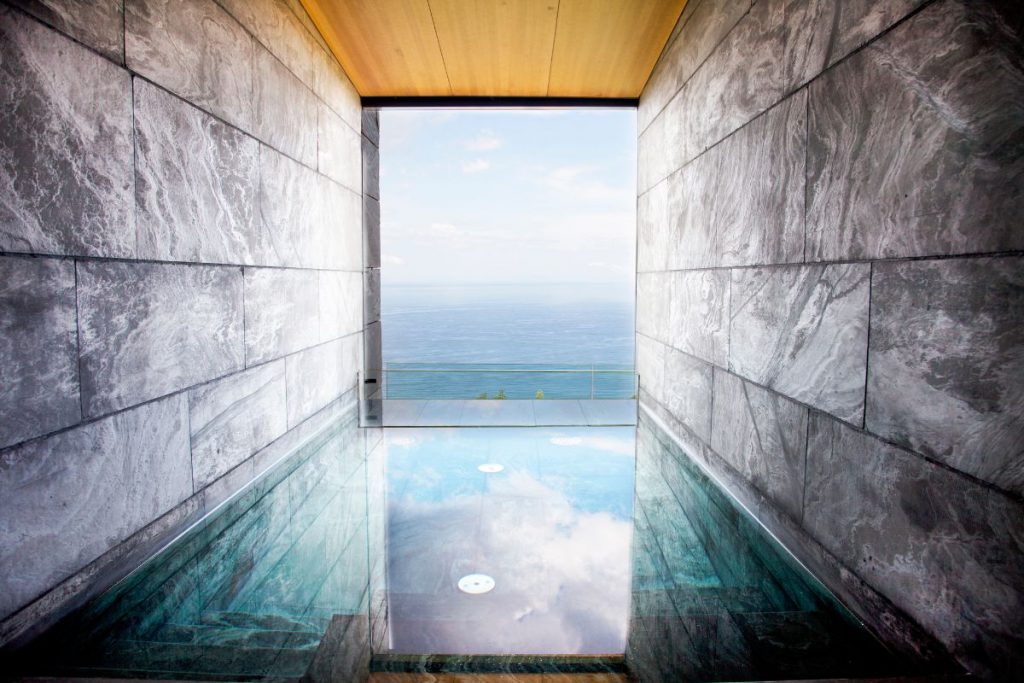
In their design, the Mecanismo studio used natural oak to bring warmth against the sobriety of stone. Here, luxury is felt but not imposed. Silence is sacred, protected by top-tier acoustic insulation that filters out noise to let only nature through. Technology has been integrated invisibly, with home automation systems and Bang & Olufsen audio that are there to serve, not distract. The suites offer private plunge pools that connect with infinite views toward the sea, erasing the last frontier between guest and horizon.
The experience of calm and introspection is the essence of the Wellness & Spa Akelarre. With its stone volumes and play of shadows, the atmosphere might inevitably recall the sacredness of Peter Zumthor’s Therme Vals. However, here the stone doesn’t enclose us in the mountain for introspection—it frames the horizon to launch us toward the sea.
In the end, Akelarre achieves the perfect paradox of sustainable luxury: building to disappear. Here, architecture doesn’t seek to be a monument to the designer’s ego, but a silent frame for the Cantabrian Sea. As the sun sets and the stone in my room is tinged with salt spray and shadow, I understand that Subijana, beyond welcoming us to eat at his house, has taught us to sleep within the landscape. And in a world that shouts, the true privilege is this silence.
Editorial note: This feature was produced during an editorial stay in collaboration with LuX&BO. All opinions, analysis, and assessments are independent.
Hotel Information:
Akelarre Hotel & Spa
Location
Paseo del Padre Orcolaga 56, Monte Igueldo
20008 San Sebastián / Donostia (Gipuzkoa), Spain
Contact
- Phone: +34 943 311 208
- Email: info@akelarre.net
- Website: akelarre.net
- Instagram: @akelarrehotel
Affiliations
- Relais & Châteaux
- European Ecolabel (EU Ecolabel) — First Spanish hotel
Accommodation
- 22 rooms (540-1,076 sq ft)
- All with Cantabrian Sea views
- Suites with private plunge pools
- Bang & Olufsen technology and home automation
Restaurants
- Restaurante Akelarre: 3 Michelin Stars
- Chef: Pedro Subijana
- 50th anniversary in 2025
- “Urteurrena” tasting menu
- Espacio Oteiza: Casual fine dining
Wellness & Spa
- Natural stone spa overlooking the sea
- Wellness treatments
- Architecture inspired by European thermal baths
Sustainability
- 100% renewable energy
- Zero-kilometer products and local suppliers
- Horeca Zero project (food waste reduction)
- Waste management and recycling
- EV charging stations
- Ventilated facade and green roof
Architecture
- Studio: Mecanismo (Marta Urtasun and Pedro Rica)
- Opening year: 2017
- Main material: Moiré phyllite
- Concept: Subtraction architecture integrated into Monte Igueldo
How to Get There
San Sebastián Renfe Train Station: 3.7 miles (6 km)
From San Sebastián city center: 15-minute drive
San Sebastián Airport: 15.5 miles (25 km)
Bilbao Airport: 62 miles (100 km)


