

Beyond the paradisiacal beaches and piña coladas, Puerto Rico reveals itself as a territory of tensions and an indomitable spirit. This chronicle explores the complex reality of the “Island of Enchantment,” from the re-emergence of La Perla to the rhythm of salsa and reggaeton, to the challenges of diaspora, the energy crisis, and the fight for cultural sovereignty. An essential testimony on Boricua resilience and the meaning of conscious travel.
1. Old San Juan: Identity on the Edge
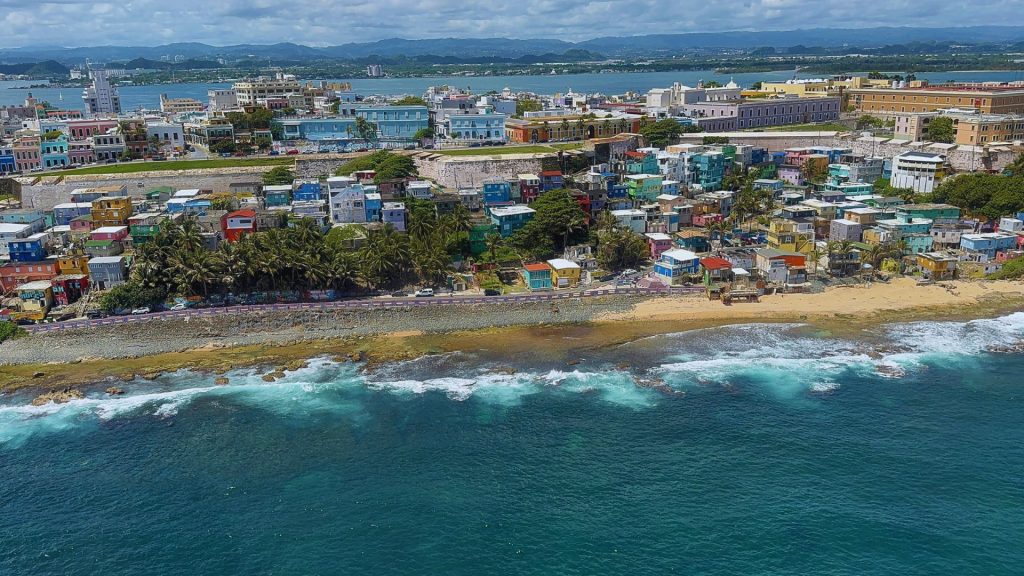
- The salty air rises from the nearby cliffs of La Perla to my table at La Vergüenza, where I savor mofongo stuffed with octopus.
- Sitting here, I try to understand the island’s dual identity, a place where, as one person told me, “This is not the United States”.
- The historic neighborhood of La Perla, known worldwide thanks to Luis Fonsi’s “Despacito,” struggles to maintain its identity in the face of the growing arrival of image-seekers. It remains a symbol of resistance, having been established outside the city walls to house slaves and non-white servants.
- This tension echoes the words of writer Luis Rafael Sánchez: “…Puerto Rico moves towards where its people move, towards the shore where they go to give their dead and their living”.
2. Between Tradition and Diaspora: Maria’s Scars
- Puerto Rico is a country still recovering from Hurricane Maria (2017), which entailed huge economic losses and produced a diaspora that accentuates the plight of the country.
- More than 6 million Puerto Ricans already live on the mainland, twice as many as on the island.
- Despite this, the resilience of the Puerto Rican people is striking, with an ability to rebuild infrastructure and hope.
- In Utuado, Raúl, who lost everything, now farms using agroecological techniques that make his crops more resistant to future extreme weather events. His story perfectly illustrates the spirit of a people who refuse to be defined by their tragedies.
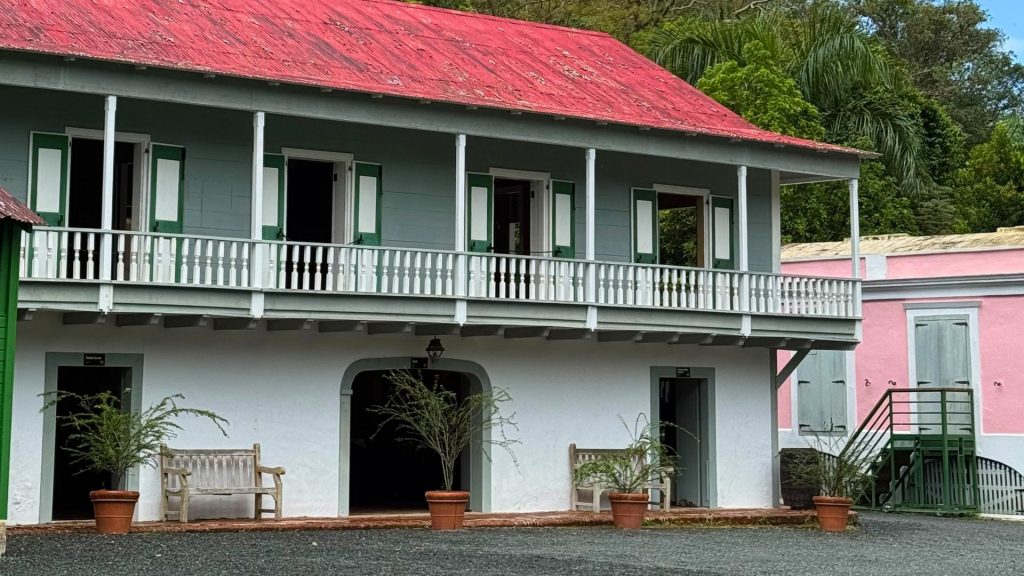
- My visit to Hacienda Buena Vista, a former 19th-century coffee plantation, showed a tangible commitment to preserving historical and ecological heritage through sustainable engineering.
3. Ponce: Salsa, Rum, and Chorreos (The Rap of Yesterday)
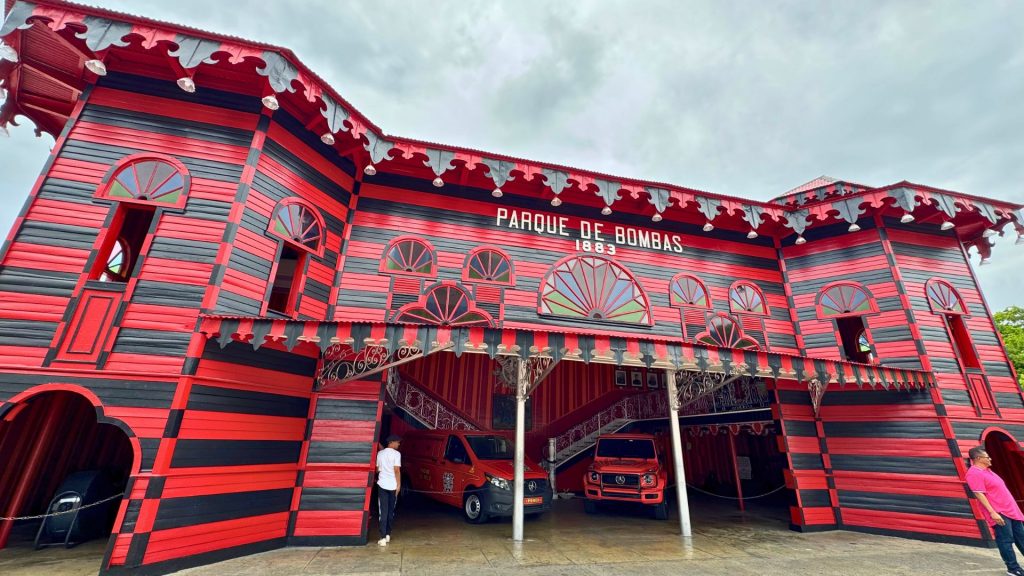
- Ponce, the “Pearl of the South”, is the second most important city, known for its Spanish colonial and neoclassical Creole architecture.
- Music is an integral part of its identity, earning it the title: “The Cradle of Salsa”.
- My waiter, Tito Vicente, a local musician, explained the origins of the plena and bomba, born from Afro-descendant workers in the sugar cane fields.
- What is most fascinating are the Décimas and street chorreos, improvised competitions of sung poetry that took place on street corners15. These bore a striking parallel to what we know today as rap and freestyle, functioning as a form of cultural expression and resistance.
- I also discovered Ponce’s rich rum history on the “Ponce, City of Rum Tour,” which highlighted the city’s relationship with the Don Q distillery and the influential Serrallés family.
4. Yauco and the Struggle for the Land
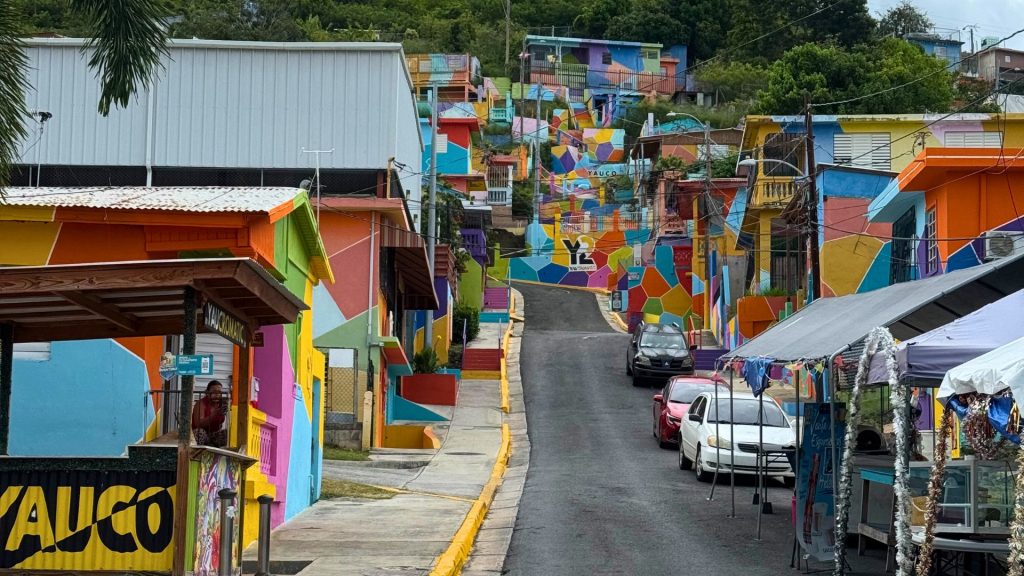
- In Yauco, the “city of coffee” , I visited the fascinating Yaukomatic project. This social initiative transformed dilapidated homes into a vibrant open-air museum, demonstrating how art can be a powerful tool for community resilience and urban regeneration following natural disasters.
- Despite its colorful streets, the island struggles with its agricultural past. The country imports more than 80 percent of the food it consumes, and access to arable land has become more difficult due to real estate speculation.
- This reliance puts food and economic stability in check, with only 5 percent of cultivated farms run by people under 35, compromising generational change.
- While savoring the national drink at Dulce y Salado, I thought of the piña colada. Regardless of the passionate debate over its 1954 or 1963 origin, the cocktail perfectly represents the Puerto Rican spirit: colorful, resilient, and with an unmistakable ability to transform the ordinary into the extraordinary.
5. Political Dilemma and the “Yo No Me Quito” Generation
- An eye-opening conversation with Amanda, a young tourism worker, revealed the complex energy reality: frequent power outages and a web of corruption that prevents efficient infrastructure.
- Many young people, despite university training, end up leaving or working in hospitality because it offers better salaries, reflecting a mismatch between education and job opportunities.
- Dissatisfaction with the current status is driving growing support for the independence movement. While full independence is difficult, the sentiment is clear: “something must be done” to change Puerto Rico’s political status quo.
- The shared passion and resilience manifests in expressions like “Yo no me quito” (I don’t quit) and “Puerto Rico se levanta,” which function as mantras of collective resistance.
Final Thoughts: Beyond Tourism
This trip transformed my perception. I learned that to truly know a destination, you must talk to its inhabitants, taste its food, and be willing to listen to its stories—both the happy and the painful ones.
Puerto Rico is a lesson in how to live with passion, face adversity with dignity, and celebrate life even when circumstances are difficult. As Sony told me in Ponce, Puerto Ricans are “like rice”: they adapt to any environment without losing their essence. This capacity for creative adaptation is the island’s true treasure.
The greatest attraction for the conscious traveler is the opportunity to witness, in real time, the triumphs and challenges of a society that seeks to redefine itself without losing its essence.
Practical Guide for the Conscious Traveler
Getting Around the Island: Renting a car is recommended for exploring outside of San Juan, as public transportation is limited.
Responsible Lodging: Consider local lodging options such as “paradores” (small hotels) or accommodations run by Puerto Ricans to support the island’s economy.
Local Economic Support: Try to shop at local businesses and visit farmers’ markets.
Recommended Reading: “La guagua aérea” by Luis Rafael Sánchez to better understand the cultural context.
READ THE FULL REPORT:
For a complete immersion into the complexity of the “Island of Enchantment” and a deeper look at its sociopolitical challenges, access the original, long-form version:
➡️ Read the Full Report: Puerto Rico: Identity and Survival in the American Caribbean


